
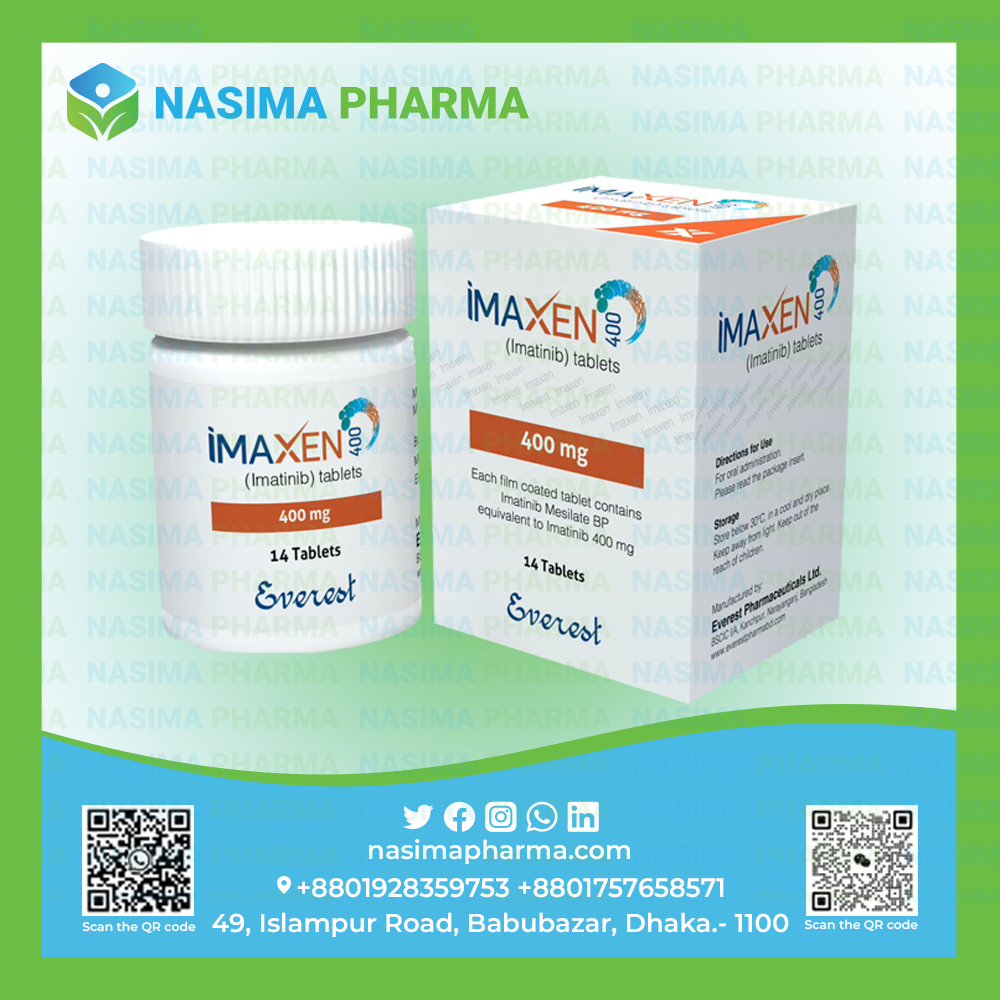
Description
Indication
Chronic myeloid leukemia, active lymphoblastic leukemia, myelodysplastic, high peosinophy syndrome, mastocytosis, dermatobrosarcoma protuberance, malignant gastrointestinal stromal
Administration
To be taken with food and a large glass of water.
Adult Dose
Acute Lymphoblastic Leukemia Relapsed or Refractory Philadelphia Chromosome Positive (Ph+) Acute Lymphoblastic Leukemia (ALL) 600 mg PO qDay Myelodysplastic/Myeloproliferative Disease Indicated in adults with myelodysplastic/myeloproliferative disease associated with myelodysplastic receptoplastic disease. 400 mg PO qDay as determined by FDA-approved test Hypereosinophilic Syndrome/Eosinophilic Leukemia Hypereosinophilic syndrome and/or chronic eosinophilic leukemia in those with FIP1L1-PDGFR-alpha-alpha-alpha analysis diffusion or FIP1L1-PDGFR-alpha-alpha-alpha analysis diffusion. and for patients with HES and/or CEL who are FIP1L1-PDGFR-alpha fusion kinase negative or unknown 400 mg PO qDay For patients with demonstrated F1P1L1-PDGFR-alpha fusion kinase: 100 mg PO qDay; May increase to 400 mg qDay in absence of adverse drug reaction if evaluation demonstrates inadequate response to therapy Chronic myeloid leukemia Chronic phase Philadelphia chromosome positive (Ph+) in newly diagnosed adult and pediatric patients with chronic myeloid leukemia (C0ML) phase. PO qDay chronic phase after failure of interferon-alpha therapy: may increase to 600 mg/day in the absence of serious adverse drug reactions and severe nonleukemia-related neutropenia or thrombocytopenia: disease progression (at any time), failure to achieve a satisfactory hematologic after at least 3 months of treatment response, failure to achieve a cytogenetic response after 6-12 months of treatment, or loss of a previously achieved hematologic or cytogenetic response Accelerated phase or blast crisis 600 mg PO qDay 400 mg PO q12hr may occur in the following situations in the absence of severe adverse drug reactions and severe nonleukemia-related neutropenia or clots Oscytopenia: Disease progression (at any time), failure to achieve a satisfactory hematologic response after at least 3 months of treatment, failure to achieve a cytogenetic response after 6-12 months of treatment, or loss of previously achieved hematologic or cytogenetic response Indicated for dermatofibrosarcoma protuberans in adults with resectable, recurrent and/or metastatic dermatofibrosarcoma protuberance 400 mg PO q12hr Mastocytosis Indicated in adults Invasive systemic mastocytosis Indicated in adults D816V with F-DA-C-A-C-A-C-A-C-A-C-DA Mutational status unknown without D816V c-Kit mutation tested with: 100 mg PO qDay c-Kit mutational status unknown: 400 mg PO qDay If unresponsive to other therapies associated with eosinophilia ASM (a clonal hematological disease associated with fusion kinase -FIP-F-R-P-L-P-1-A clonal hematological disease associated with F-R-1. ): 100 mg PO qDay initially, may increase to 400 mg/day in absence of adverse effects if response to therapy Insufficient gastrointestinal stromal tumor resectable and/or metastatic malignant GIST 400 mg PO qDay; May increase to 400 mg BID in patients showing clear signs or symptoms of disease progression to low doses and in the absence of serious adverse drug reactions Adjuvant treatment after complete gross resection of GIST 400 mg PO qDay x3 years. by 25%.
Child Dose
Chronic Myeloid Leukemia Indicated for newly diagnosed adult and pediatric patients with Philadelphia chromosome positive (Ph+) chronic myeloid leukemia (CML) in chronic phase <1 year: safety and efficacy not established > 1 year: 340 mg/m²/day PO; Acute lymphoblastic leukemia indicated for the treatment of newly diagnosed children with Philadelphia chromosome positive (Ph+) acute lymphoblastic leukemia (ALL) not exceeding 600 mg/day <1 year: safety and efficacy not established > 1 year: 340 mg/mpo/day; Do not exceed 600 mg/day
Contraindication
অতি সংবেদনশীলতা। স্তন্যপান।
Mode of Action
Imatinib is a tyrosine kinase inhibitor that inhibits the BCR-ABL tyrosine kinase caused by the Philadelphia chromosome abnormality in chronic myeloid leukemia (CML). It blocks proliferation and induces apoptosis in BCR-ABL positive cell lines, as well as fresh leukemic cells from Philadelphia chromosome positive CML. Imatinib inhibits platelet-derived growth factor (PDGF) and stem cell factor (SCF), c-Kit, receptor kinases for PDGF- and SCF-mediated cellular events.
Precaution
Increased risk for cardiac disease or CHF. Monitor for signs of severe fluid retention. Monitor CBC regularly. Renal and hepatic impairment. Monitor LFTs. pregnancy Lactation: Imatinib and its active metabolite are excreted in human milk; Advise a lactating woman not to breastfeed during treatment and for 1 month after the last dose
Side Effect
>10% edema (53%), neutropenia (grade 3: 7-27%; grade 4: 3-48%), nausea (43%), muscle cramps (35%), muscle pain (34%) , thrombocytopenia (grade 3: 1-31%; grade 4: 1-34%), rash (32%), fatigue (31%), diarrhea (30%), headache (29%), arthralgia (27%), Abdominal pain (23%), myalgia (21%), nasopharyngitis (19%), hemorrhage (19%), vomiting (15%), dyspepsia (15%), cough (13%), dizziness (13%), URT infection (13%) %), fever (12%), weight gain (12%), hepatotoxicity (6-12%), insomnia (11%) 1-10% Flushing, palpitations, dry skin, erythema, metabolic hyperglycemia , stomatitis/mucositis, lymphopenia <1% aplastic anemia, atrial fibrillation, avascular necrosis, cardiac failure, cardiogenic shock, embolism, eosinophilia Potentially fatal: hepatotoxicity, cerebral edema, increased intracranial pressure, papilloedema. Pleural and pericardial effusions, pulmonary edema and ascites result in severe fluid retention. Rarely, GI perforation.
Interaction
Increased serum levels with CYP3A4 inhibitors (eg azole antifungals, macrolide antibiotics). Decreased serum levels with CYP3A4 inducers (eg carbamazepine, dexamethasone, phenobarbital, phenytoin, rifampicin). May increase serum levels of substrates of CYP3A4 (eg cyclosporine, pimozide, triazolo-benzodiazepines, dihydropyridine Ca channel blockers, certain statins), CYP2C9 (eg warfarin) and CYP2D6.


Reviews
There are no reviews yet.